

When the Rev. Canon Carrie Schofield-Broadbent, canon for transition and church development in the Episcopal Diocese of Central New York, gives the keynote address at diocesan convention on November 5, she will speak about Gather-Transform-Send, a model for congregational growth and vitality developed by the College for Congregational Development.
For some congregations in the diocese, the model will be new. But others have learned and adopted it as a result of their participation in the College, which is now offered each summer at Waycross.
“This is work we’ve always done; we’re just beginning the process of using the language of Gather-Transform-Send,” said Cindy Bullard of St. James, New Castle. Pat Carter, also of St. James, agreed, calling Gather-Transform-Send a “simple, practical, easy-to-use model. It’s a basic model for growth, taking what we do all the time while expanding our thinking about it. G-T-S was a great opportunity to organize our thoughts.”
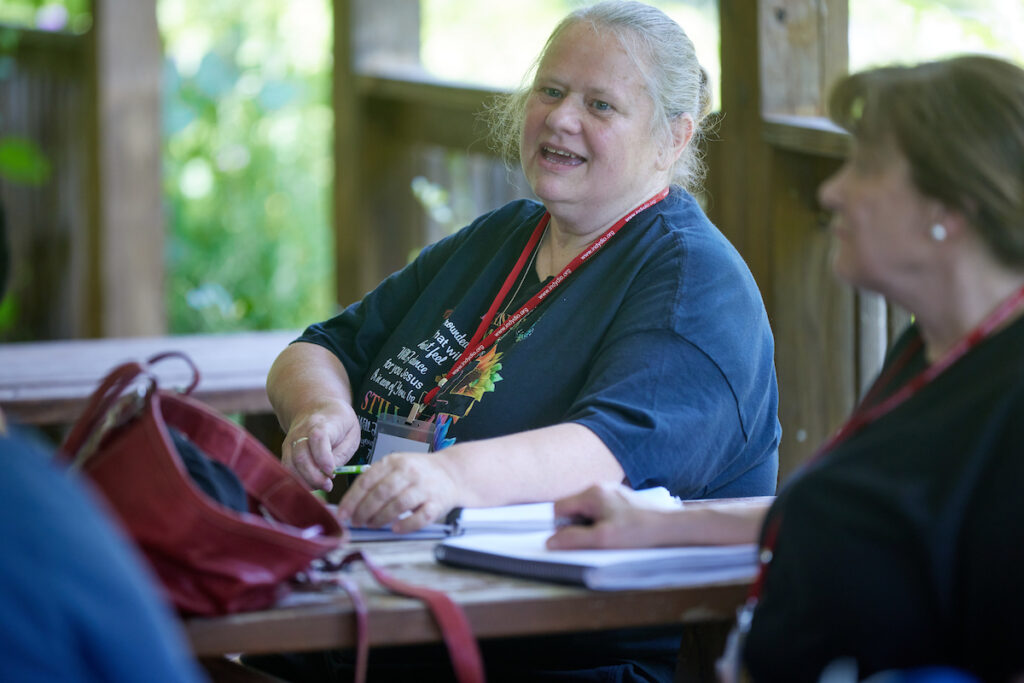
St. James, New Castle is a mission-minded church, according to both Bullard and Carter, accustomed to reaching out into the community with meals and other events. After beginning to use the G-T-S model, congregation members have been working to be more intentionally invitational, bringing the community into their building even as they continue outreach. New signage, upcoming special events, and better use of the building all grow out of their engagement with Gather-Transform-Send.
They credit these simple tweaks to their existing program with bringing people into the building and into the community of faith. Last year, St. James invited outside vendors to participate in their annual bazaar. One of those vendors became interested in the parish and its work and is now a newly baptized member.
Gather-Transform-Send is a ‘good model to live by,’ said Bullard. “It’s about bringing folks together, sharing the Word, making disciples.”
Connie Betts, of Trinity, Lawrenceburg, was introduced to the G-T-S model when Canon Kristin White used it with the bishop’s committee while the congregation was between vicars. The model provided good tools for the interim period, which coincided with the COVID pandemic. Earlier this year, Betts attended the College for Congregational Development to learn more about the model. “Gather-Transform-Send was helpful in thinking about what keeps us here and the gifts we want to recognize and highlight,” she said. “Simplicity is a great benefit of the model. Having this tool was valuable as we focused on being transformed.” Betts noted that with the Rev. Dr. Jason Haddox, the congregation’s new vicar, they are excited to continue using Gather-Transform-Send. “We think it will be a good way for him to get to know the parish and for the parish to take a fresh look at what we’re doing.”
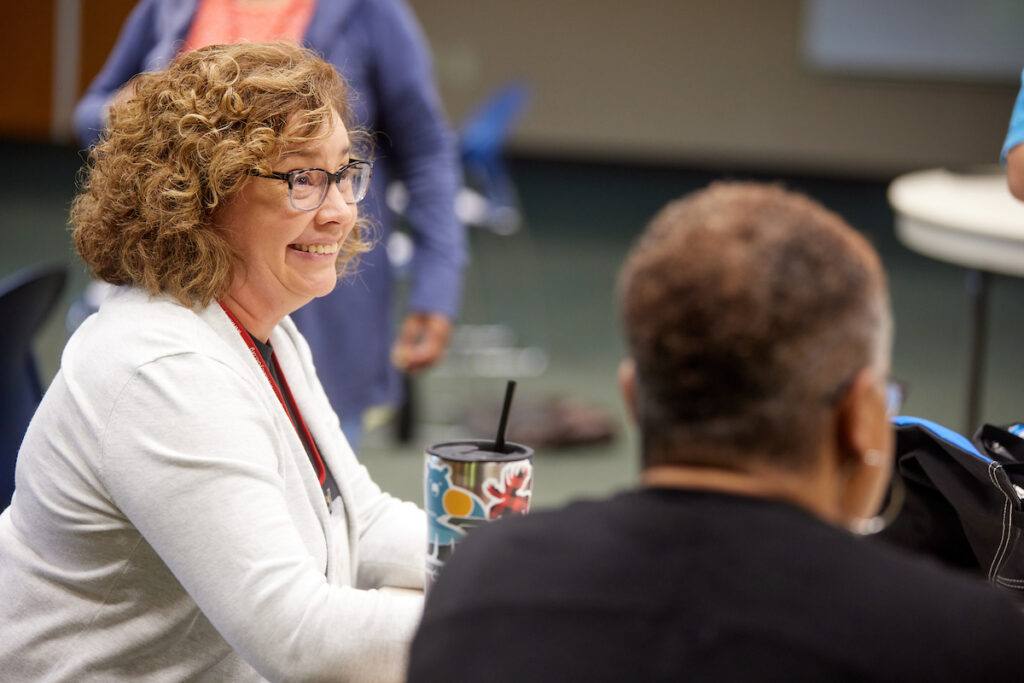
“When you break the model down, Gather-Transform-Send is a circle that leads from one stage to another; you can start anywhere,” Carter said. “The whole model causes a congregation to see strengths that can be highlighted.”
Alissa Newton, co-founder of the College for Congregational Development and a priest in the Diocese of Olympia, confirms G-T-S’s success at St. James and Trinity. “To gather, be transformed by prayer and the worship of God, and then sent out to do the work we have been given to do is the core purpose of every congregation. If your church manages to have worship and pray with anybody there – in person or online – you are doing your core purpose. Gather-Transform-Send is about strengthening what your church already does and having language about that core purpose.”
Schofield-Broadbent believes that the model can encourage, inspire, and equip congregations to look at where they are strong as foundation for growth, and looks forward to sharing it at diocesan convention. “Every Sunday we have a choice. What makes church more valuable for your life than any number of other things? What difference does your experience of faith / faith community make in the ways you live your life in the world? These are the questions that G-T-S invites, forming a core for growth.”
